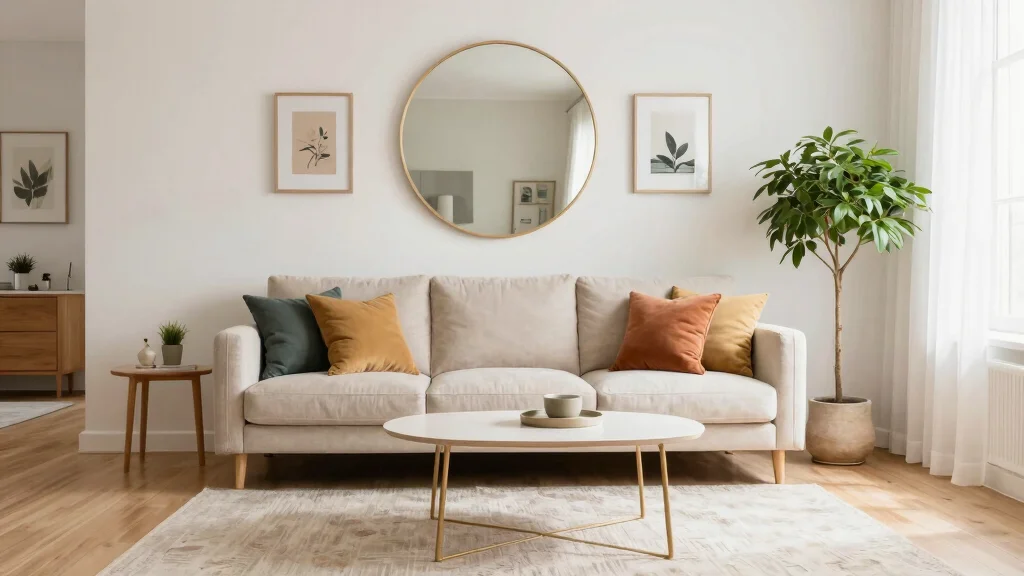
Creating a welcoming and spacious living room in a small space can feel like a daunting task. If you’ve been feeling cramped and are craving a little more room to breathe, you’re not alone. Many of us dream of wide-open spaces but often have to settle for cozy corners instead. Luckily, there’s a clever way to make your living room feel bigger without knocking down walls. Enter mirrors! These magical pieces of decor can transform any small space into a more open and airy environment.
This post is designed specifically for those who love home decor and are on the hunt for practical styling solutions. If you’re someone who enjoys small space living and is looking for innovative mirror ideas for your living room, you’re in the right place. In this blog, you’ll discover 14 creative mirror ideas that not only enhance your space but also add style and personality to your home. Whether you’re into oversized floor mirrors, gallery walls, or chic decorative accents, you’ll find options that suit your taste and space.
Get ready to dive into these mirror ideas that are not only functional but also aesthetically pleasing. You’ll learn how to utilize reflective surfaces to open up your living area, create focal points, and make a lasting impression on anyone who steps through your door. By the end of this article, you’ll be equipped with fresh ideas to beautify your small living room while giving it that spacious feel you desire.
Key Takeaways
– Use oversized floor mirrors to visually expand your space and create a focal point that draws the eye upward.
– Consider a gallery wall of mirrors to add personality and intrigue while reflecting light around the room.
– Incorporate mirrored furniture for a sleek look that maximizes reflection and adds a touch of glamour.
– Explore mirrored accent walls to create a stunning backdrop that enhances depth and dimension in your living area.
– Add decorative mirrors in strategic wall placements to increase light flow and create the illusion of a more open space.
1. Oversized Floor Mirrors
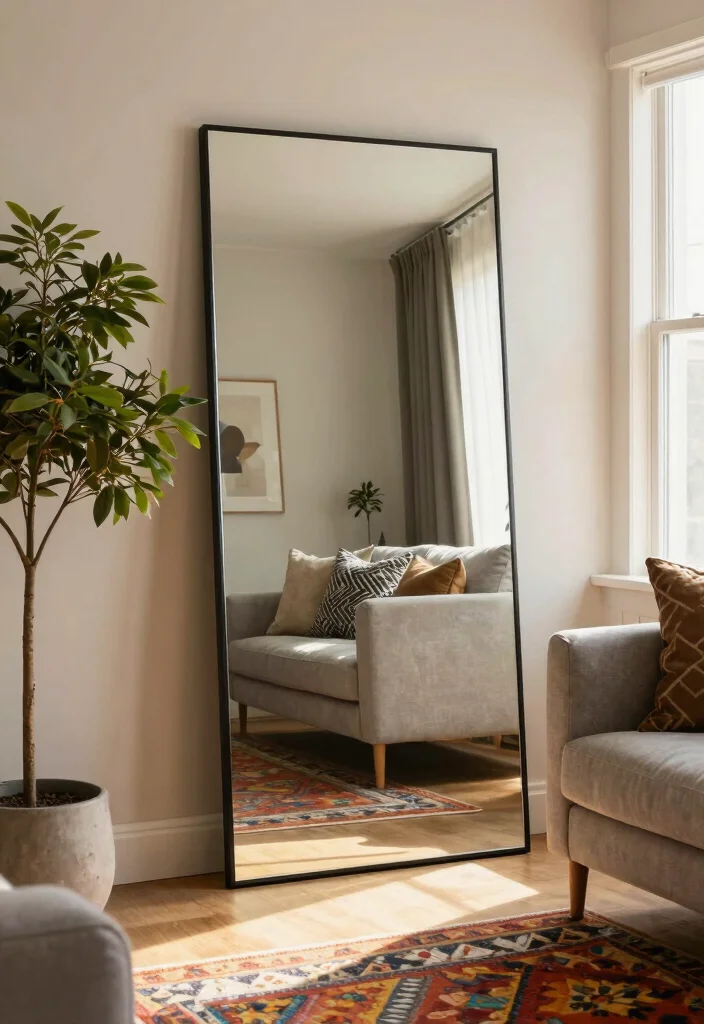
Oversized floor mirrors are a breathtaking way to create the illusion of a larger space. When these mirrors lean against a wall, they serve not only as functional pieces but also as striking art that reflects light and adds depth to the room. Opt for styles that resonate with your decor—consider ornate vintage frames for a cozy touch or sleek, modern designs for a contemporary aesthetic.
Choosing the right placement is essential; positioning the mirror to reflect beautiful views or natural light can enhance your space dramatically. A strategic corner placement or positioning it behind a sofa can elevate your room’s overall style.
– Tip: Ensure the mirror is tall enough to reflect both the room and the ceiling to create a sense of height.
– Insight: Pair the mirror with decorative items like plants or unique furniture to maintain a balanced look.
This approach not only adds sophistication but also utilizes textures and materials to enhance the overall design.
2. Gallery Wall of Mirrors
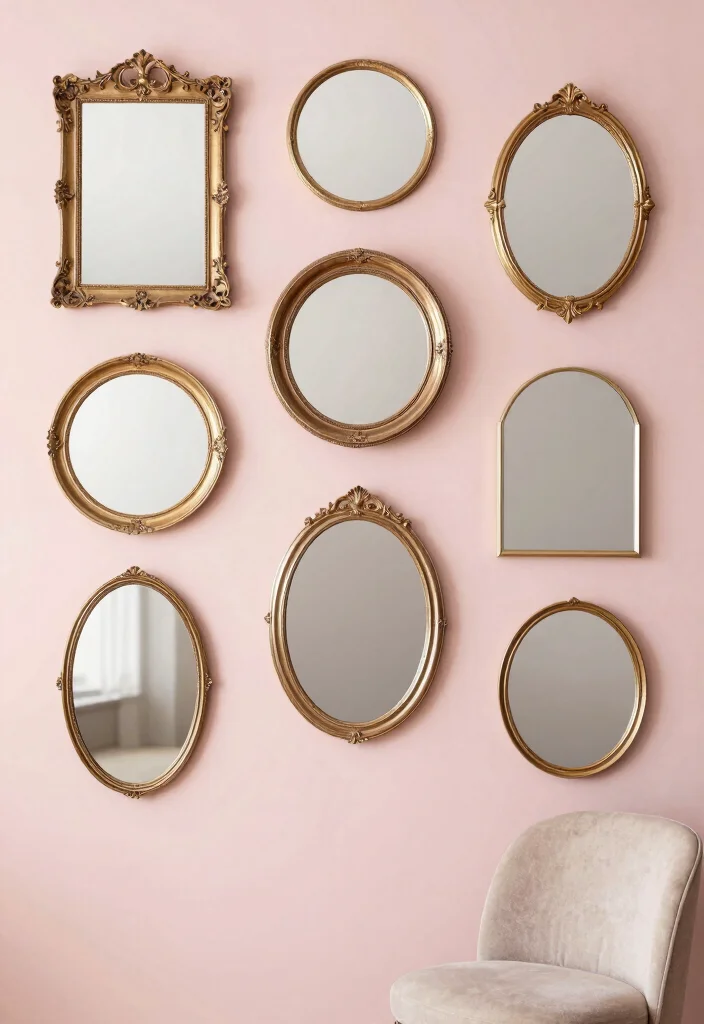
A gallery wall of mirrors is both stylish and functional, making it a fantastic choice for enhancing your living space. This design allows for diverse shapes and sizes, adding personality while facilitating an expansive feel. Curating the arrangement of mirrors creates a captivating focal point that draws the eye.
Begin by gathering a mix of mirrors—think hexagonal, circular, or vintage styles. Arrange them to form a pattern that feels eclectic yet cohesive, reflecting light and tricking the eye into perceiving a larger area.
– Tip: Use various frame colors or styles for visual interest while ensuring they align with a common theme.
– Insight: Hang the mirrors at eye level to highlight your room’s best features, such as windows or artwork.
This playful yet sophisticated idea adds depth and charm to your decor.
Gallery Wall of Mirrors
Editor’s Choice





3. Mirrored Furniture
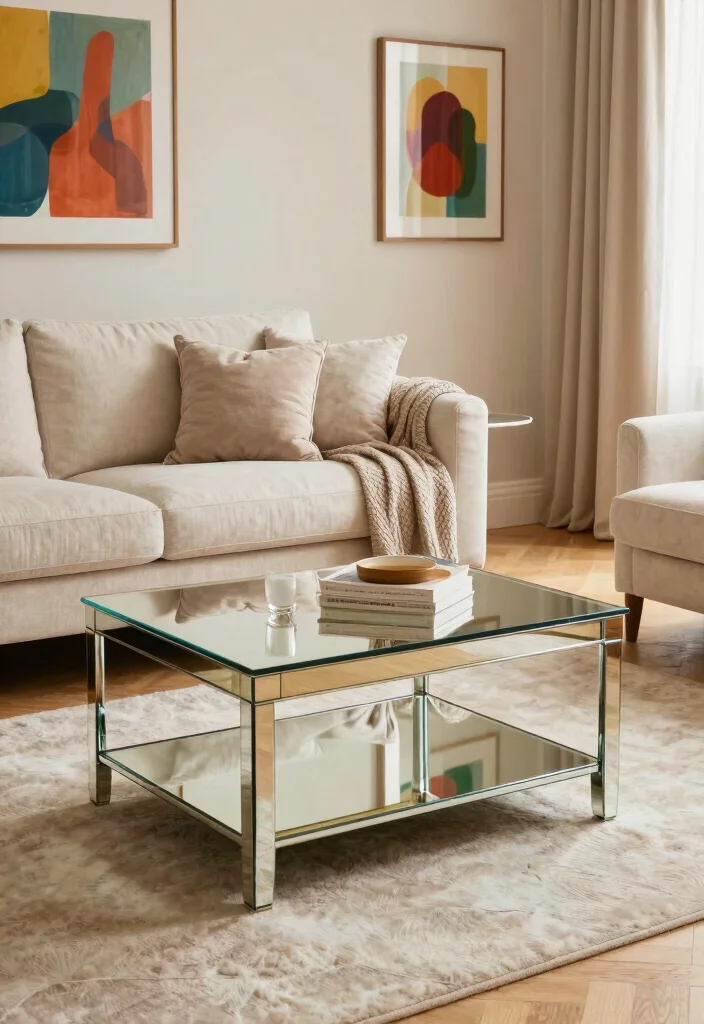
Mirrored furniture adds a touch of glamour while optimizing reflective surfaces in your living room. Items like coffee tables and console tables with mirrored finishes can brighten the space and create an elegant atmosphere.
When selecting mirrored furniture, pay attention to the size of the pieces. A large coffee table may overpower the room, while a smaller one can act as a stunning focal point without cluttering the area.
– Tip: Pair mirrored furniture with softer elements like plush rugs or fabric sofas to create a harmonious balance.
– Insight: Position it to reflect a beautiful view or a key decor item, enhancing the spacious feel of the room.
This style can seamlessly fit into a variety of design aesthetics, making it a versatile choice for any living room.
Dimensions & Size Guide
Standard Sizes & Measurements:
When selecting mirrors for your living room, size matters significantly. The right dimensions can enhance the space’s aesthetic and make it feel larger. Here are some common mirror sizes to consider:
– Oversized Floor Mirrors: These typically range from 60 to 80 inches in height. They work best when you have ample wall space to showcase their elegance. Aim for a minimum of 24 inches of floor space for stability and visibility.
– Gallery Wall Mirrors: Creating a gallery wall involves various sizes. Expect to include mirrors ranging from 12 inches to 36 inches in diameter. Ensure you have at least 4 to 6 inches of space between each piece for a balanced look.
– Mirrored Furniture: Pieces like coffee tables or accent tables can be 30 to 60 inches in length. Make sure there’s at least 18 inches of space around them for easy movement.
– Round Mirrors: Common sizes are 24, 30, and 36 inches in diameter. These work well above furniture, so ensure at least 6 inches of clearance above any surfaces.
– Mirrored Shelves: A depth of 10 to 12 inches is standard. This allows enough room for decorative items without overwhelming the wall space.
Quick Reference Table:
| Size/Dimension | Best for: | Minimum space needed: |
|---|---|---|
| 60-80 inches (Floor Mirrors) | Creating a statement | 24 inches of floor space |
| 12-36 inches (Gallery Wall Mirrors) | Gallery wall setups | 4-6 inches between mirrors |
| 30-60 inches (Mirrored Furniture) | Functional decor | 18 inches around furniture |
| 24-36 inches (Round Mirrors) | Above furniture styling | 6 inches of clearance |
| 10-12 inches (Mirrored Shelves) | Display areas | 10-12 inches of wall space |
Space Planning Tips:
Planning your space effectively ensures that your mirrors serve their purpose without overwhelming your living room. Here are some practical tips:
1. Measure Your Wall Space: Use a tape measure to determine the height and width of the wall where you want the mirror. This helps avoid selecting a mirror that is too large or small.
2. Consider Furniture Placement: Ensure there’s enough room around furniture for the mirror to reflect light and make the space feel airy. A mirror too close to a sofa may not be effective.
3. Think About Reflective Surfaces: Mirrors should reflect light sources like windows or lamps. Position them for optimal light reflection without creating glare.
4. Avoid Clutter: Too many mirrors can overwhelm a small space. Stick to one focal mirror or a cohesive gallery wall for balance.
5. Check Heights: Hang mirrors at eye level for the best visual effect. Typically, this is about 58 to 65 inches from the floor to the center of the mirror.
Pro Tip: The most crucial measurement is ensuring that your mirror is hung at eye level. This maximizes its visual impact while keeping the space feeling open and inviting. When in doubt, step back and assess how the mirror looks from various angles to achieve the best effect!
4. Floating Mirrors
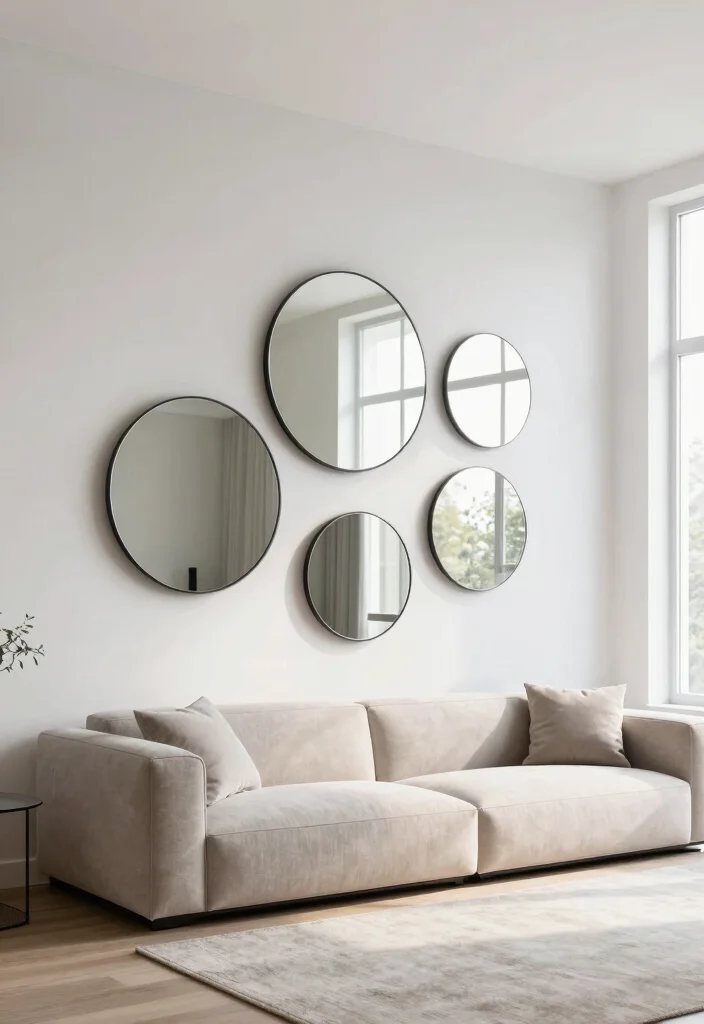
Floating mirrors offer a sleek and modern aesthetic, ideal for smaller spaces. These mirrors lack traditional framing, allowing them to blend effortlessly with the wall, creating an airy atmosphere that enhances the perception of space.
Position these mirrors above a sofa or console table for an elegant touch. Their versatility in shapes—circular, rectangular, or abstract—can introduce exciting visual dynamics to your decor.
– Tip: Use a collection of small floating mirrors to create a larger reflective area without consuming much wall space.
– Insight: Incorporate LED backlighting to add drama and enhance the illusion of depth.
Floating mirrors are perfect for achieving a contemporary vibe while maintaining minimalism, making them a great addition to compact living areas.
Fact: Floating mirrors – no frames, just sleek glass – reflect more light and make spaces feel bigger; a go-to in mirror ideas for living room. In small spaces, a pair or trio can visually expand walls by up to 20%, especially above a sofa.
5. Mirrored Accent Walls
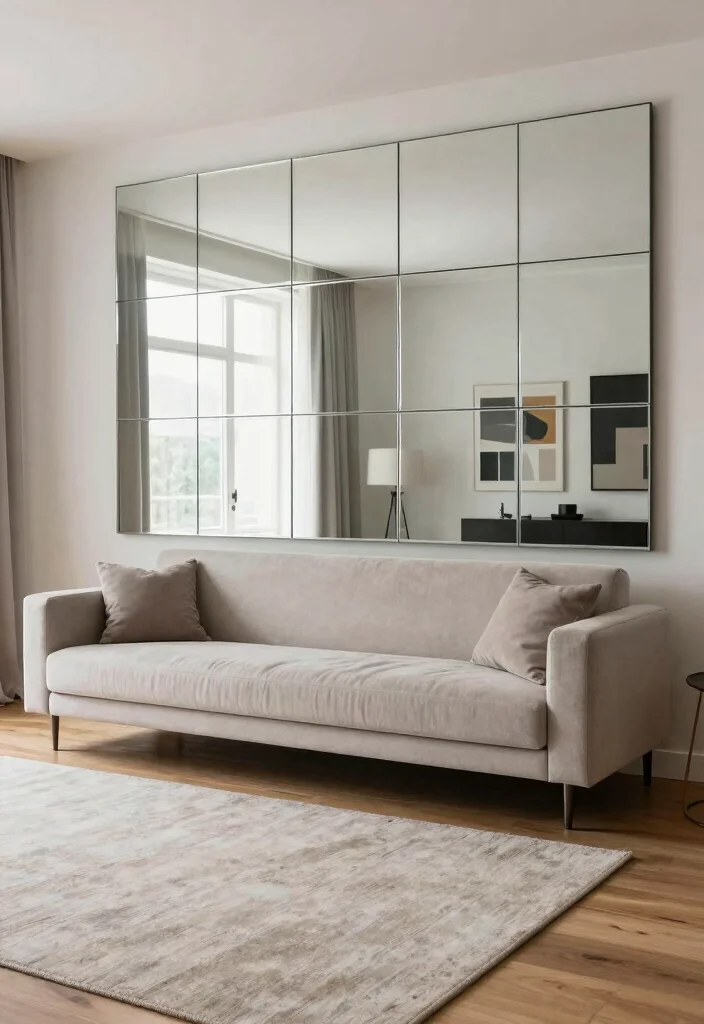
A mirrored accent wall is a bold choice that can transform a small living room, captivating the eye and expanding the space. This dramatic effect contributes not only depth but also style, serving as a stunning backdrop for your furniture or artwork.
When designing a mirrored accent wall, consider using tiled mirrors or large panels. This feature works wonderfully behind a sofa or media unit, reflecting light and creating a dynamic visual statement.
– Tip: To prevent overwhelming the space, balance the mirrored wall with neutral furnishings and soft textiles.
– Insight: Incorporate artwork or shelves to break up the reflections, providing focal points in the decor.
This striking design can significantly enhance the brightness and spaciousness of your living area.
Mirrored Accent Walls
Editor’s Choice


6. Mirrored Frames for Art
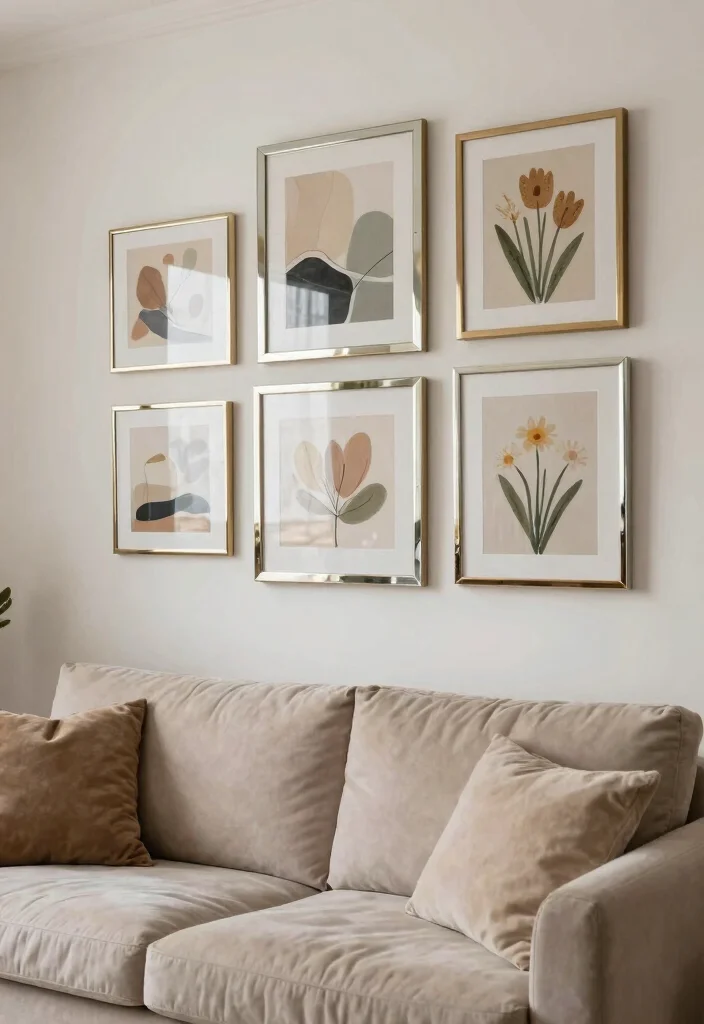
Using mirrored frames for your artwork adds a unique flair, elevating both the art and the room’s visual impact. This technique not only reflects light but also magnifies it, making the entire space feel brighter and more open.
Mix and match different art styles within mirrored frames to create a personalized gallery that showcases your taste. Position the framed art at eye level for maximum effect and to unify the room’s aesthetic.
– Tip: Choose framed pieces that reflect your personality, whether they are vintage prints or modern abstracts.
– Insight: Use mirrored accents sparingly to avoid overpowering the decor; balance with various textures and colors for a cohesive look.
This method adds character while enhancing the spaciousness of your living area.
7. Mirrored Decorative Accessories
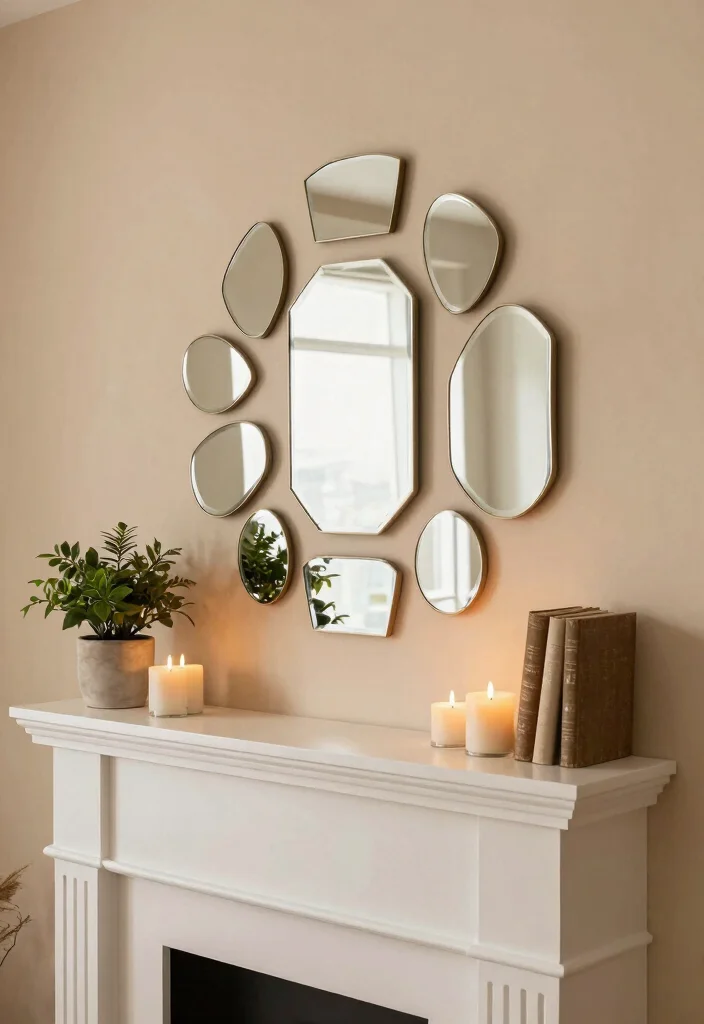
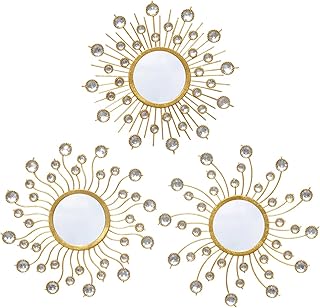
Incorporating decorative mirrors as accessories can subtly boost the spacious feel of your living room. Small mirrors can be strategically placed on shelves, mantels, or tables, creating layers and reflections without overwhelming the design.
Available in various shapes and styles—from geometric to vintage—these mirrors can act as accents that catch light and draw attention, adding dimension without taking up much room.
– Tip: Group smaller mirrors for a curated look or scatter them throughout your space for an eclectic vibe.
– Insight: Select mirrors with different textures and finishes for a rich visual experience.
Decorative mirrors not only serve practical purposes; they also infuse your personality into the decor, enhancing even the smallest spaces.
Mirrored decorative accessories prove that bigger isn’t always better – smartly grouped mini mirrors reflect light and add depth without crowding the room. These mirror ideas for living room are practical, affordable, and instantly elevate small-space charm.
8. Mirrored Shelves
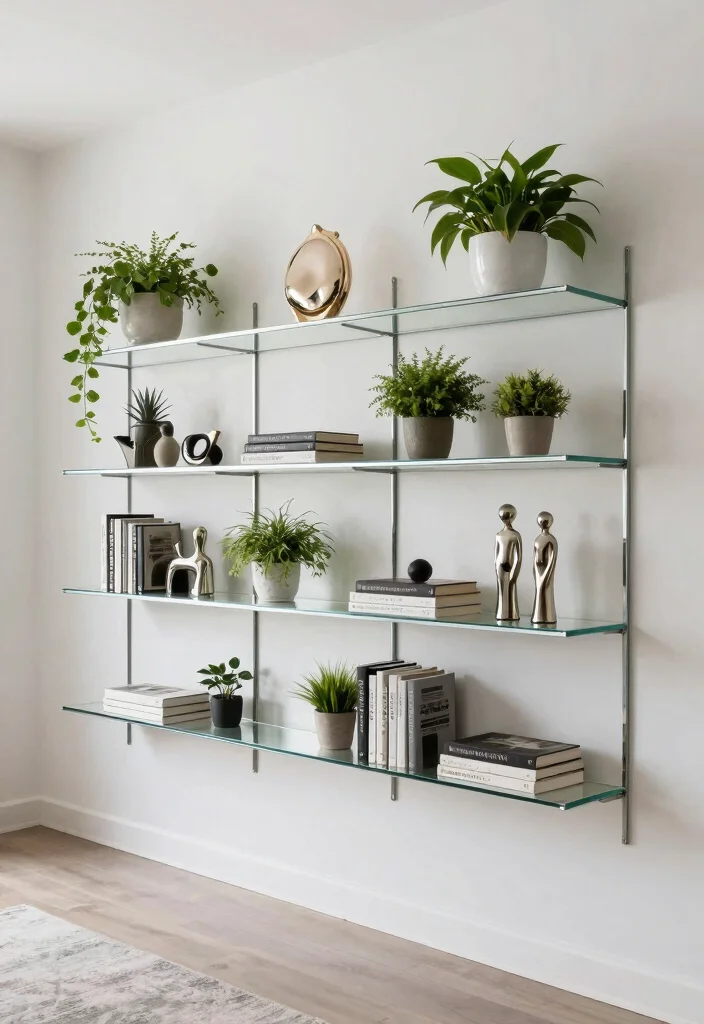
Mirrored shelves are a stylish and practical choice for displaying decor while reflecting light. Use them to showcase plants, books, or decorative items, adding vertical space to your living room without heavy furniture.
Position mirrored shelves at varying heights to draw the eye upward, emphasizing your decor while enhancing the openness of the room.
– Tip: Combine them with lighter wall colors for maximum effect; the reflections will amplify the room’s brightness.
– Insight: Consider installing them in corners or alcoves to utilize every inch of space effectively.
Mirrored shelves can add elegance and functionality, making your living area feel larger and more organized.
Mirrored Shelves
Editor’s Choice


9. Round Mirrors
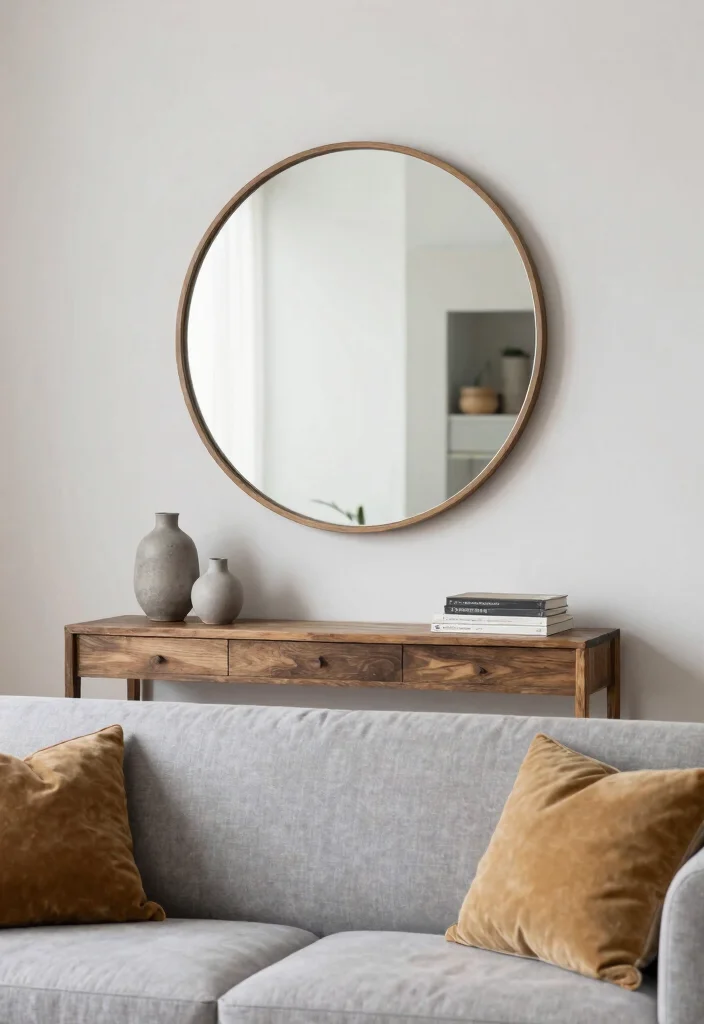
Round mirrors soften a space and create an inviting atmosphere. Their gentle curves contrast with the sharp lines of traditional furniture, making them suitable for any decor style.
Placing a large round mirror above a sofa or console table can establish a focal point while reflecting light to enhance spaciousness. The shape adds whimsy without sacrificing sophistication.
– Tip: Opt for a round mirror with a bold frame for a statement piece, or choose a minimalist design for subtle elegance.
– Insight: Group smaller round mirrors for a fun, eclectic arrangement without the heaviness of a larger piece.
Incorporating round mirrors brings warmth and enhances the airy feel in compact living rooms.
Round Mirrors
Editor’s Choice


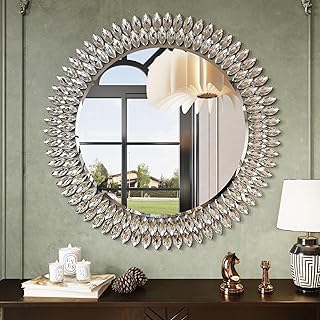

10. Mirrored Window Treatments
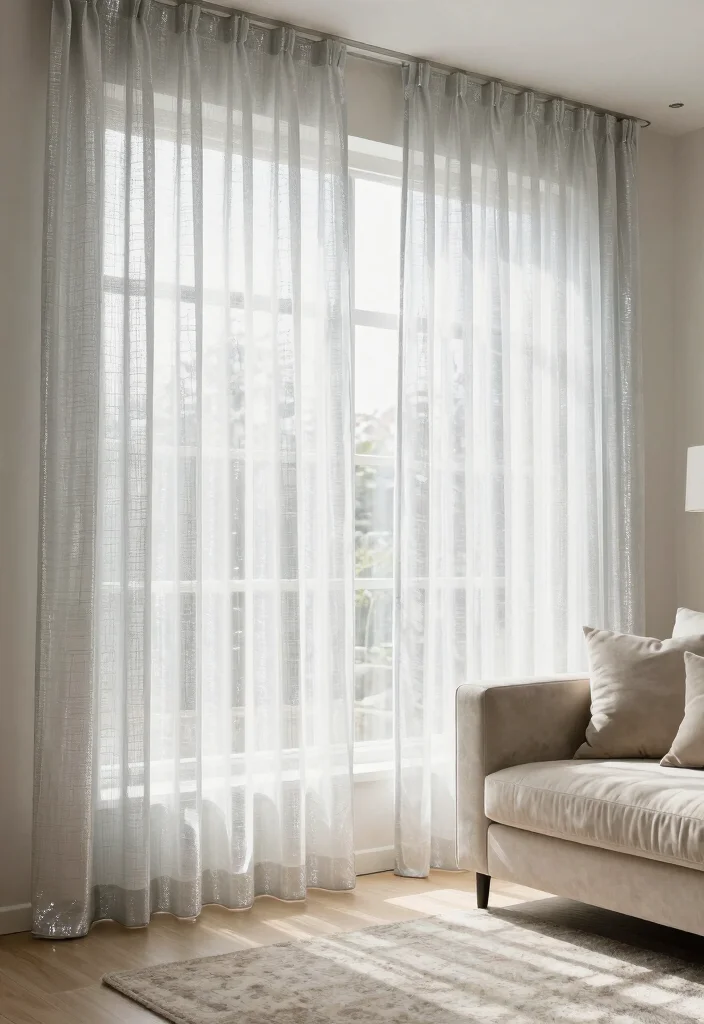
Incorporating mirrored window treatments can significantly enhance your living space’s luminosity. Sheer curtains with reflective elements not only boost natural light but also add elegance to your room.
Choose light, airy fabrics adorned with subtle reflective patterns that catch the light, creating an illusion of more space as it flows freely.
– Tip: Pair with simple or muted furniture to maintain visual harmony.
– Insight: Layering with sheer curtains allows flexibility in adjusting light levels while preserving an expansive atmosphere.
This approach effectively marries mirrors with textiles, ensuring a bright and open feel in your living room.
11. Reflective Decorative Trays
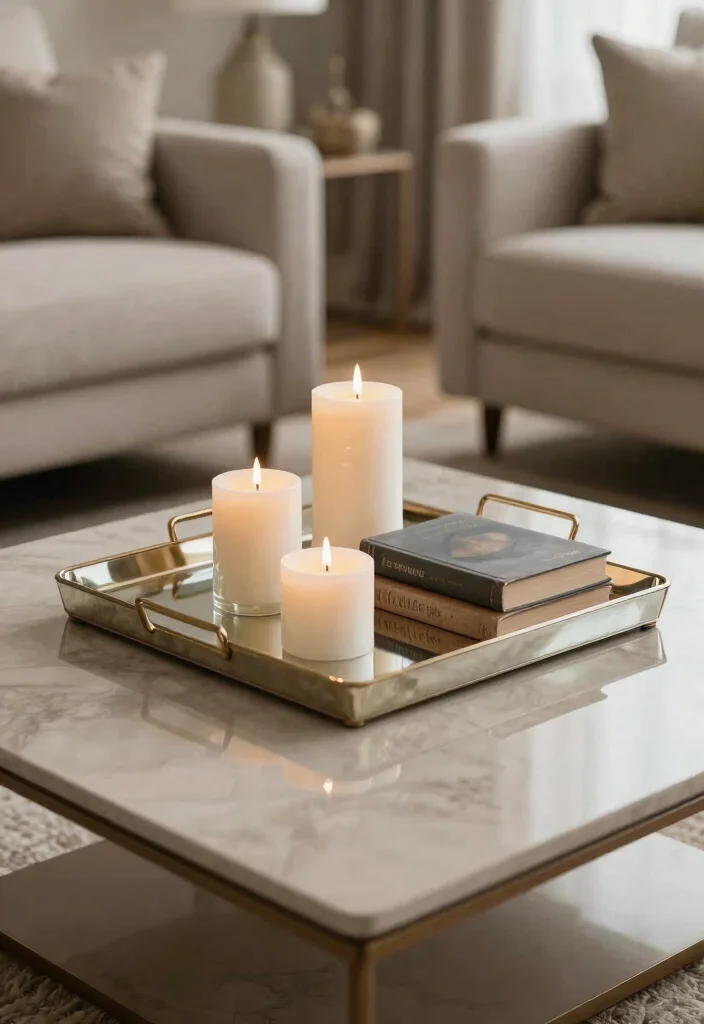
Reflective decorative trays serve both function and style in your living room. These trays help organize items like remote controls or candles while adding visual intrigue to the space.
Place them on coffee tables or console tables, providing surface area that reflects light, subtly expanding the visual space.
– Tip: Choose trays with intricate designs or textures to add depth and ensure they complement your existing decor.
– Insight: Layer a mirrored tray with items of varying heights for an eye-catching arrangement.
Incorporating these trays can enhance your style while keeping your living space neat and organized.
Reflective Decorative Trays
Editor’s Choice


12. Mirrored Accessories
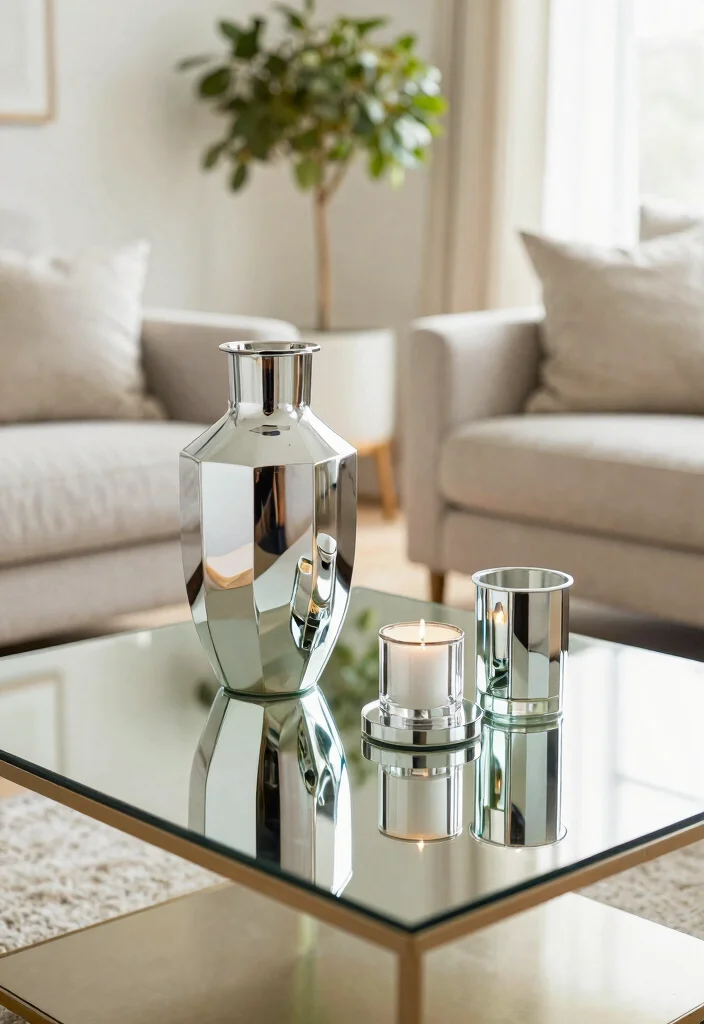
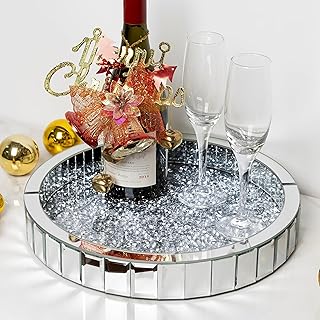
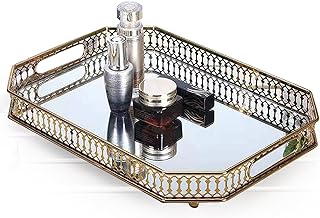
Mirrored accessories, such as vases and candle holders, add elegance and maximize light in your living room. These decorative items can serve as stunning accents, reflecting light and creating depth without overwhelming the space.
When selecting these accessories, look for unique shapes or intricate designs that stand out while blending seamlessly with your decor.
– Tip: Group various mirrored accessories for an eye-catching vignette that captures attention.
– Insight: Mixing mirrored elements with natural textures, like plants or wood, creates a balanced and inviting look.
Mirrored accessories not only enhance light but also upgrade the spaciousness of your living area effectively.
13. Vintage Decor with Mirrors
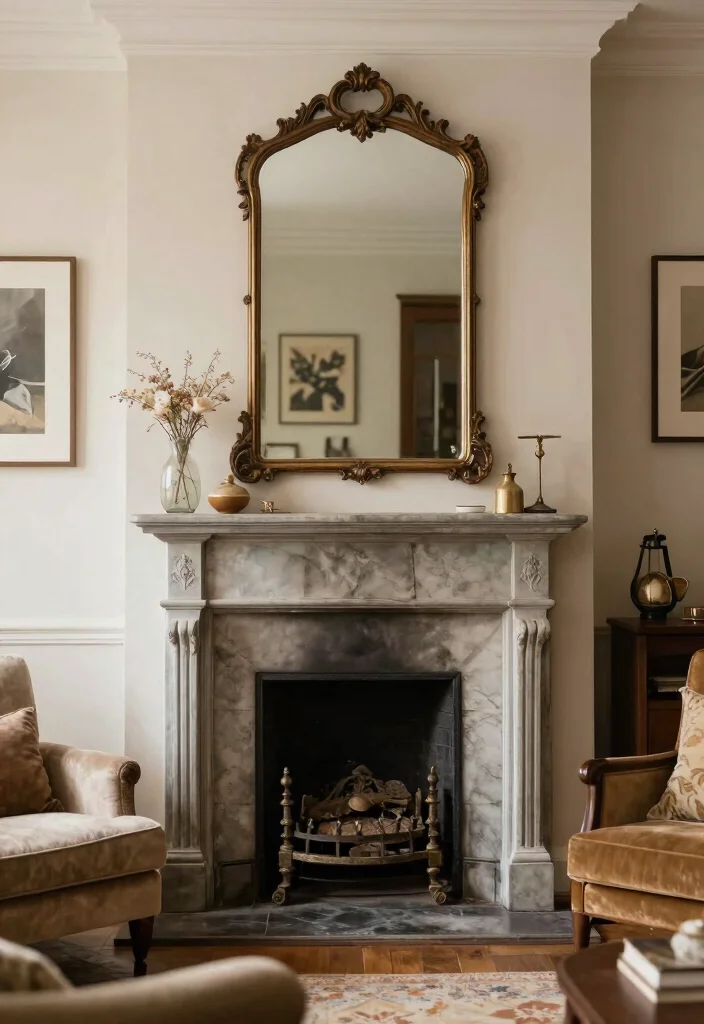
Integrating vintage decor into your living room adds character, and mirrors are the perfect tool to amplify that charm. Vintage mirrors often feature ornate frames or distinctive designs, serving as captivating focal points.
Hang a vintage mirror above a fireplace or as part of a gallery wall to evoke a warm, nostalgic atmosphere in your space.
– Tip: Combine vintage mirrors with contemporary decor elements for a beautiful contrast that feels curated.
– Insight: Look for pieces with interesting backstories to add depth to your decor.
This blend of old and new creates a captivating ambiance while enhancing the openness of your living room.
Vintage mirrors instantly add character to your living room. Hang one above a fireplace or in a gallery wall to boost warmth and light. Pair antique frames with modern elements for a curated look—mirror ideas for living room that feel intentional.
14. Mirrored Accents in Lighting
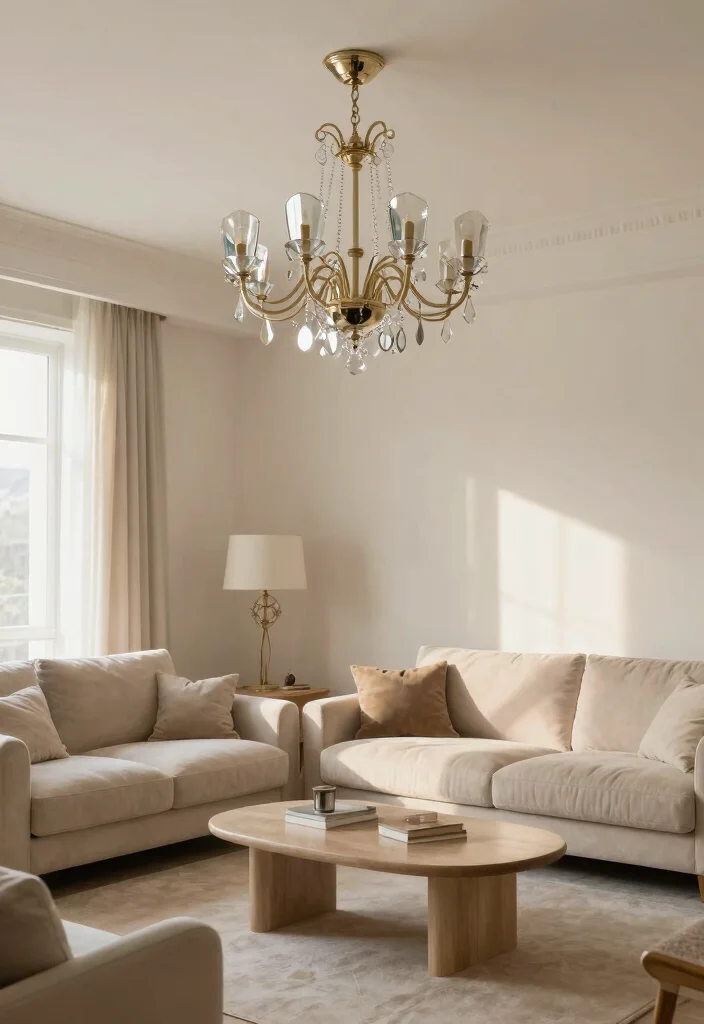
Incorporating mirrored accents in lighting, such as chandelier bases or lamp stands, can significantly elevate your living room’s ambiance. These fixtures reflect light beautifully, generating a warm glow while enhancing the sense of space.
Seek lighting options that incorporate mirrored elements or consider adding mirrored lamps to your decor. Proper placement of these fixtures can maximize their reflective properties, boosting the room’s brightness.
– Tip: Utilize dimmers to control light levels, allowing you to establish the perfect mood while keeping the spacious feel.
– Insight: Pair mirrored lighting with soft fabrics and light colors to balance shiny elements and maintain warmth in the decor.
This lighting strategy enriches the design and elevates the overall atmosphere of your living room.
Conclusion
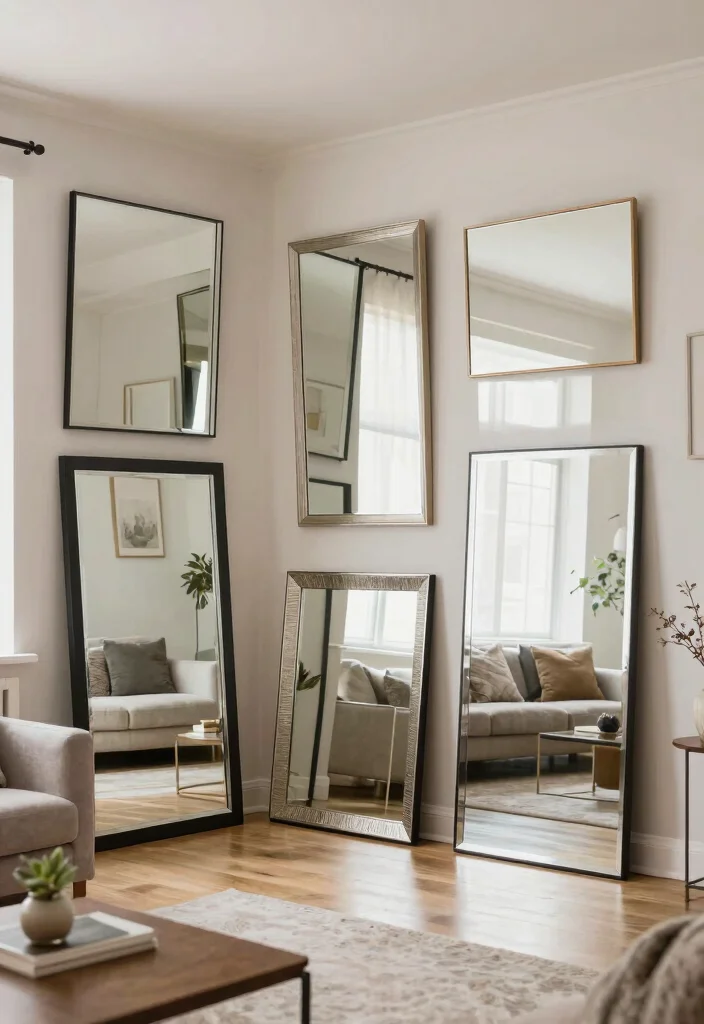
Incorporating mirrors in various forms is one of the simplest and most effective ways to enhance the feeling of space in your living room. Whether it’s through oversized pieces, decorative accents, or innovative placements, mirrors open up possibilities for style and function.
Creating a harmonious space with mirrors can transform your living room into a bright, inviting haven. Consider these ideas to find the perfect way to expand your room visually, bringing in light, depth, and personality.
Note: We aim to provide accurate product links, but some may occasionally expire or become unavailable. If this happens, please search directly on Amazon for the product or a suitable alternative.
This post contains Amazon affiliate links, meaning we may earn a small commission if you purchase through our links, at no extra cost to you.
Frequently Asked Questions
What are the best mirror ideas for making a small living room feel bigger?
For small living rooms, start with impact: a large wall mirror or a pair of decorative mirrors positioned to bounce light and expand the view. It’s one of the strongest mirror ideas for living room.
Try a floor-to-ceiling option or a tall, slender wall mirror opposite a window to double natural light. Mix two or three decorative mirrors with different shapes for visual interest, but keep frames light or frameless so they don’t visually clutter the space. Use reflective surfaces strategically—mirror the edge of a doorway, the back of a console, or a slim mirror gallery on a focal wall—to instantly enhance living room styling while preserving coziness.
How should I place wall mirrors in a small living room for maximum space?
Start by thinking about light and sightlines. Place a large wall mirror opposite a window to bounce daylight deeper into the room, and hang mirrors at eye level for natural balance.
If you prefer flexibility, lean a tall floor mirror against a wall rather than mounting it. Create symmetry with two smaller mirrors flanking a centerpiece, or arrange a cluster of decorative mirrors in a linear or staggered pattern for a curated look. Keep spacing even and avoid blocking architectural features.
What shapes and sizes of decorative mirrors work best for small spaces?
In tight spaces, one oversized mirror with a slim frame often beats a wall full of tiny mirrors. Round mirrors soften corners and reflect more evenly, while rectangular or square shapes can elongate walls.
Combine two or three mirrors in different shapes for a chic gallery vibe, but choose a cohesive finish (e.g., all brushed metal or all wood frame in light tones) to maintain calm. Also consider using various reflective surfaces like mirrored coffee tables or console backs to amplify light without adding visual bulk.
Can mirrors help improve lighting in a living room with limited natural light?
Absolutely. Position mirrors to bounce sunlight from windows across seating zones, and pair with warm LED lighting to maximize glow.
A bright, reflective surface can simulate daylight, especially on the north or east wall. Add a light-filled mirror behind a lamp to amplify both layers of light. For a flexible approach, mix a large statement mirror with smaller decorative mirrors to scatter light from multiple angles.
What common mistakes should I avoid with living room mirrors in small spaces?
Avoid crowding walls with many mirrors or placing frames that overwhelm the room—the goal is air, not clutter.
Don’t place a mirror directly opposite a TV or a busy artwork; reflections can feel busy or off-putting. Make sure mirrors are securely mounted to avoid safety issues, and keep them clean so reflections stay crisp. Finally, don’t forget scale: a mirror that’s too small or too large can ruin the balance—measure your wall and choose proportionate shapes and frames.